Planning a Proposal on Lake Como: What the Lake Decides for You
21 September 2026/7 min read
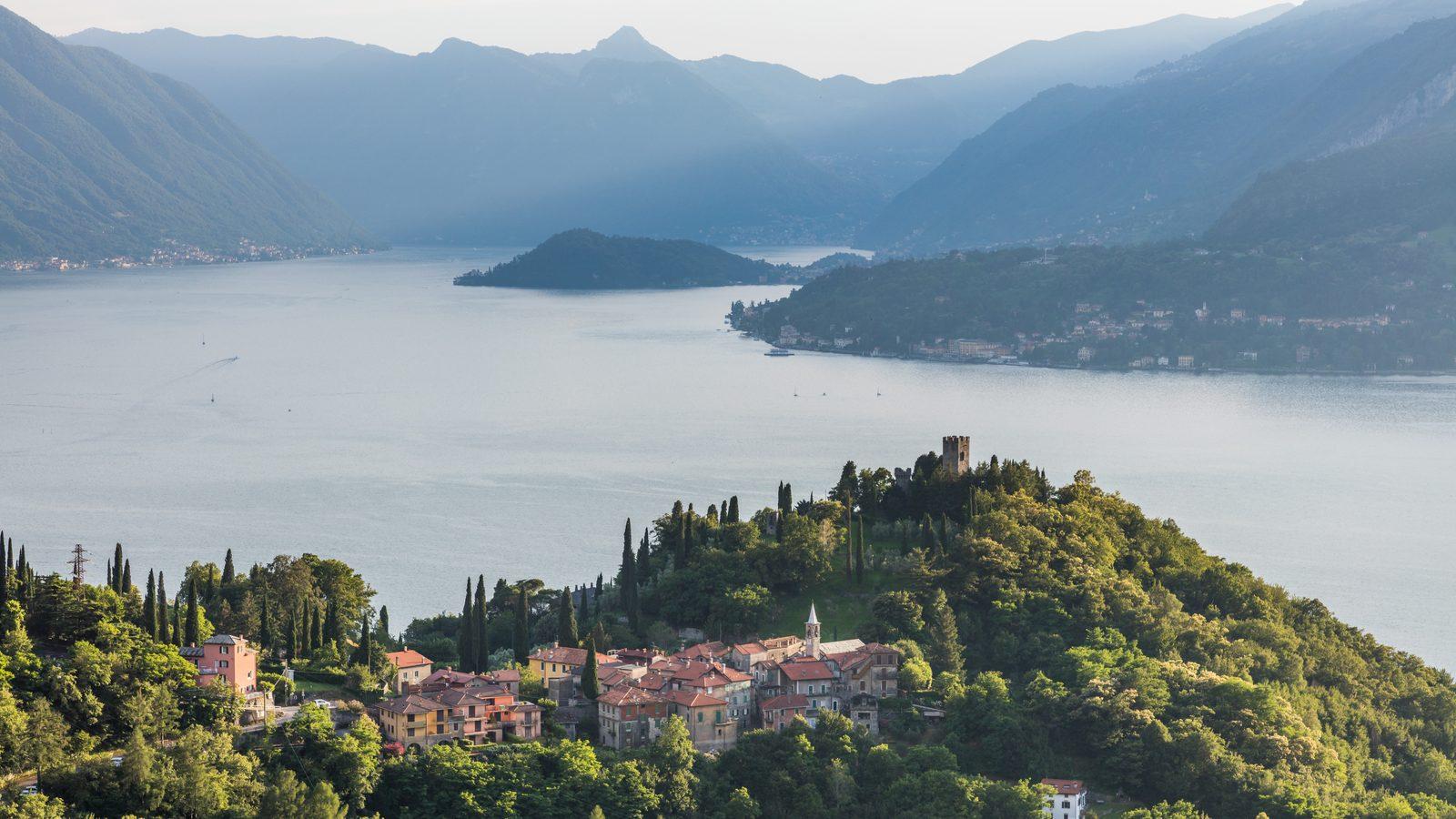
The lake is longer than it looks
Lake Como is not a place. It is roughly fifty kilometres of water shaped like an inverted Y, with mountains on both sides and a road that was built before anyone imagined a car.
This matters more than any other single fact about proposing here, and almost nobody accounts for it. A couple staying in Como and picturing a sunset moment in Bellagio are looking at a journey that takes far longer than the map suggests, on a lakeside road that narrows to one lane through villages and stops entirely when a bus meets a delivery van. Do it by car in August and the evening is gone before it starts.
The water is the road. Once you plan around boats rather than around the shoreline, the lake shrinks to a sensible size and the whole day becomes possible. Plan around the road and you will spend the golden hour in traffic above Argegno.
The light leaves early, and not at sunset
Sunset times for Lake Como are published like anywhere else, and on the lake they are close to meaningless.
The mountains rise steeply from both shores, so the sun disappears behind a ridge well before it reaches the horizon. Depending on where you stand and the time of year, usable light can end a considerable while before the official time, and it ends abruptly rather than fading. One minute the water is gold, the next the whole basin is in flat blue shade.
Which shore you are on decides when this happens to you. The eastern shore loses the sun first; the western shore, looking back across the water, holds it longer and gets the warm light on the mountains opposite. If the photographs matter, and for most couples they are the reason a planner is involved at all, that single choice moves the whole schedule by a meaningful margin.
We scout the specific spot at the specific hour before the day. Not the village, the spot, because a terrace fifty metres further along a shoreline can be in light or in shade at the moment that counts.
Villas you can book, and villas you cannot
The image most people arrive with is a private villa garden above the water. It is achievable. It is also the part of a Como proposal where expectations and reality most often part company.
The famous gardens are, for the most part, ticketed attractions with opening hours, visitor flows and rules about what may happen on the grounds. Some permit private use, at a price and with notice measured in months rather than weeks. Some will not consider a proposal at all, whatever is offered, because their calendar is committed to weddings booked a year out. A handful of the most photographed terraces on the lake cannot be reserved for a private moment by anybody, at any price.
What does exist, and what takes local relationships rather than a booking form, is the second tier: private villas that are not open to the public and do not advertise, hotel terraces that can be held outside service hours, gardens attached to houses whose owners will consider an introduction. These are not found online. They are found by asking, in Italian, people you have worked with before.
Our approach here is the same one behind proposal planning across Italy: the concept comes first and the location is matched to it, rather than a concept assembled around whatever happens to be bookable.
The boat is not transport
On Como the boat is not how you arrive at the proposal. Handled properly it is the proposal.
A classic wooden launch on this lake does something a terrace cannot. It moves you away from everyone, it puts the mountains and the villas in the background without a single other person in the frame, and it gives you a defined and private half hour that belongs only to the two of you. The engine note drops, the wake settles, and the water goes quiet in a way that tells your partner something is happening before you have said a word.
The photographic problem is the mirror of a proposal on the water in Venice, and the solution is different. Here there is no bridge to shoot from. The photographer travels in a second boat, holding station at a distance, with a long lens and an agreed position relative to the light. The two boats are choreographed in advance, because a second boat that drifts into the wrong place is not a neutral mistake. It is in the photograph.
Two lakes in one, and which one you want
The southern legs and the central branch behave like different places.
Around Bellagio, where the arms meet, you get the view that sells the lake: water in three directions, mountains stacked behind each other, the villages arranged like a set. It is also the busiest water on the lake in season, and the village itself is crowded to a degree that surprises people who have only seen photographs.
Further north the lake widens, the mountains get serious, the snow stays late on the peaks, and the villages thin out. The same water, a tenth of the boats. For a couple who would be uncomfortable proposing in front of an audience, it is a different and usually better answer.
There is no correct choice between them. There is only the choice that matches the two people involved, which is the question we start from rather than end with.
The ferry makes an excellent cover story
The hardest part of a surprise on Como is not the moment. It is the two hours before it, when your partner can see the plan assembling around them.
The public ferries solve this better than any invented excuse. They are ordinary, they are what visitors do, and a suggestion to take one across to a village for lunch raises nothing at all. It puts you both on the water with no explaining, it gets you to the shore the proposal actually happens on, and it costs nothing in suspicion.
The private boat then appears as the return leg. From your partner's side it reads as a small indulgence at the end of a nice day. From yours it is the thing the whole day was built around, waiting at a jetty with the photographer already aboard and the light half an hour from where you want it.
Cover stories fail when they are elaborate. This one works because it is the most obvious thing two people on Lake Como could decide to do.
Weather that arrives at two in the afternoon
The lake makes its own weather on a daily cycle, and it is remarkably consistent.
Mornings are typically still, with the water like glass and reflections you cannot buy. Through the middle of the day a wind builds from the south and the surface breaks up. By mid afternoon there is chop, boats move differently, hair moves differently, and a table laid on an exposed terrace stops being a good idea. Later the wind turns and eases again.
None of this is a problem once it is known. It is a schedule. The still morning and the evening calm are both usable and the windy middle is not, and a plan built on that runs smoothly while a plan built on a weather app does not.
Autumn brings a different variable. The lake holds warmth and the mornings can fill with mist, which is either the most atmospheric conditions of the year or a complete loss of the view, and which one you get is not knowable until the morning. Every plan we produce carries a second version settled in advance for exactly this reason.
Doing this from another country
Almost every proposal on this lake is arranged by someone who has never stood on it, months ahead, from a different time zone.
That is the real work, and it is unglamorous: knowing which boatman answers the phone in October, which terrace is in shade at seven, which villa will say no politely after three weeks of silence, and which hotel will hold a table without a deposit because you have sent them people before.
We have native Italian planners on the ground, and every conversation with you happens in English. There are never more than three conversations before the day. Within ten days of the first, you have a written plan covering the shape of the day, the route on the water, the timing, the florals, the photography, and the version we run if the morning arrives wrong. The consultation is complimentary and carries no commitment.
Six to eight weeks is comfortable. For peak season, May to September, or for a specific villa, three to four months is safer. We have worked to two weeks when the situation demanded it, and we will tell you plainly what is realistic in the time you actually have.
The hour that follows
The boat comes back in. Then what.
On Como this question has better answers than almost anywhere, and they need booking. A table on a terrace over the water as the lights come on along the far shore. A dinner in a villa garden. A slow return north with a bottle open on the rear bench. Or simply a room with a balcony and nowhere to be.
What does not work is arriving back at a public jetty in a village at dinner time, newly engaged, with no plan. Many couples continue straight into an engagement celebration that we plan alongside the proposal itself, which is usually the better way round: decide what the evening is before deciding what the moment is, because the moment has to lead somewhere.
Questions we are asked
- Where is the best place to propose on Lake Como?
- There is no single answer, and the honest question is which of two lakes suits you. Around Bellagio you get the view the lake is famous for, along with the season's crowds. North of it the lake widens, the mountains grow and the boat traffic thins to a fraction. Couples who would be uncomfortable with an audience are almost always happier further north.
- When does the light actually go on Lake Como?
- Earlier than the published sunset, because the sun drops behind the mountain ridge rather than the horizon, and it goes abruptly rather than fading. The eastern shore loses it first. We scout the exact spot at the exact hour beforehand, since a terrace fifty metres along the shore can be in light or in shade at the moment that matters.
- Can you propose in one of the famous Lake Como villas?
- Sometimes, with notice measured in months, and some of the most photographed terraces cannot be privately reserved by anyone at any price. The realistic route is the second tier: private villas that do not advertise, and terraces that can be held outside service hours. Those come through local relationships rather than a booking form.
- Is a boat proposal on Lake Como a good idea?
- It is the strongest option the lake offers. A classic wooden launch moves you away from everyone, puts the mountains and villas behind you with nobody else in frame, and creates a private window that belongs only to you. The photographer follows in a second boat, positioned in advance relative to the light.
- What time of year suits a Lake Como proposal?
- May and September are the two strongest months: mild weather, gardens either in bloom or turning, and fewer boats than high summer. Autumn brings lake mist, which is either the most atmospheric light of the year or a total loss of the view, and which one you get is not knowable until that morning.
- How far ahead should a Lake Como proposal be planned?
- Six to eight weeks is comfortable. For peak season, which runs May to September, or for a specific villa, three to four months is safer. We have delivered on two weeks' notice when the situation demanded it, and we will tell you plainly what is realistic in the time you have.
Planning something like this
Tell us what you have in mind. The first conversation is complimentary and carries no commitment.
Request a private consultation