Proposing in Venice by Gondola: What the Planning Actually Involves
20 September 2026/8 min read
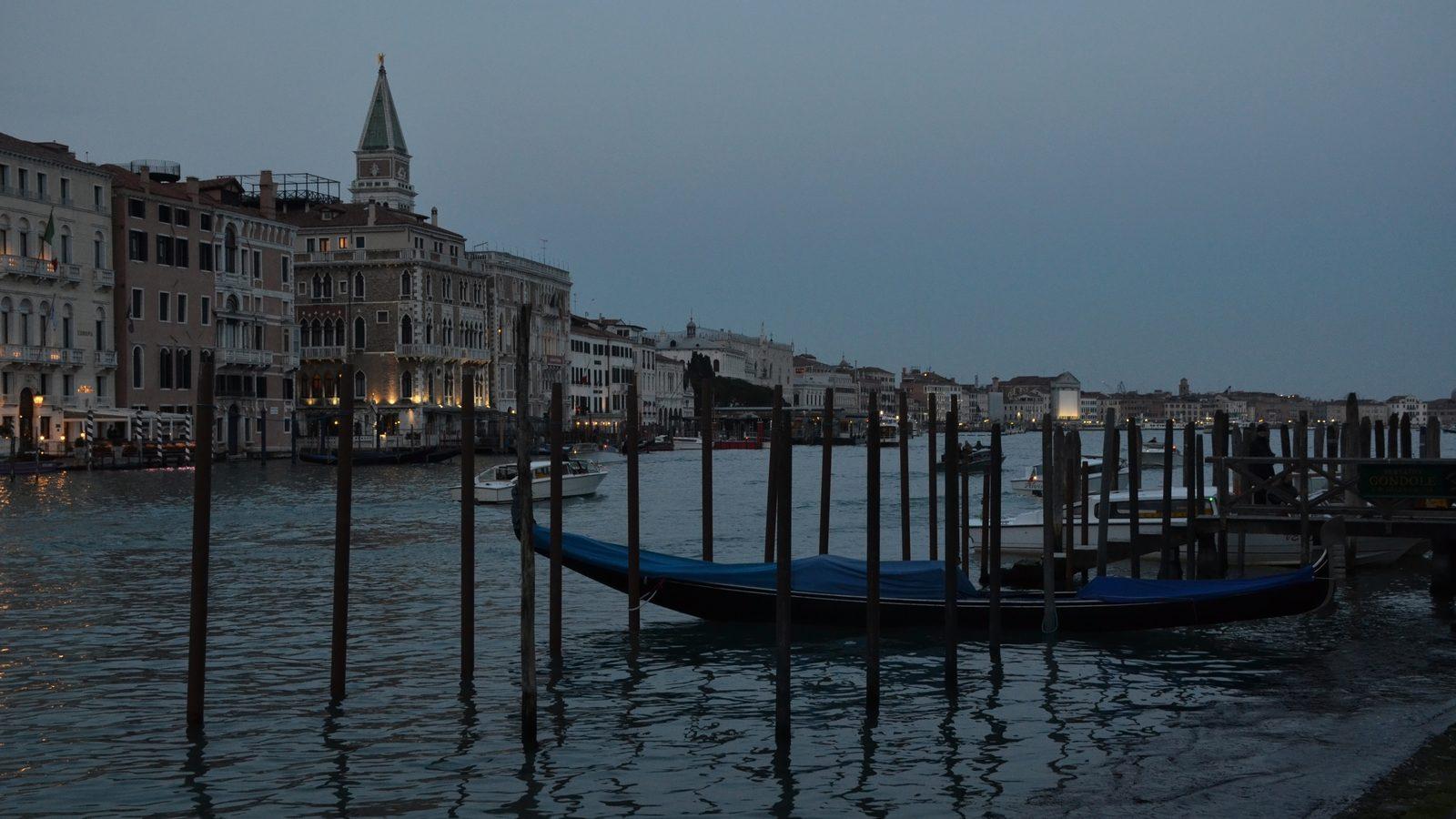
The gondola is a moving set
Most proposal advice treats the gondola as a backdrop. It is not a backdrop. It is a narrow, unstable, slowly moving platform carrying two people, a stranger with an oar, and whatever you have hidden in a coat pocket, through water that reflects every light in the city back at your camera.
That is what makes it worth doing, and it is also why more gondola proposals go slightly wrong than any other kind in Italy. Not catastrophically wrong. Just slightly: the light gone by the time the boat reaches the quiet canal, the photographer stranded on the wrong bridge, the ring produced while the gondolier is turning and the boat is rocking, the moment captured from behind.
Everything below is the difference between a gondola proposal that reads as inevitable and one that reads as improvised. If you are still deciding whether the water is right at all, it helps to start from what she would actually want rather than from the postcard.
The hours that hold
Venice has two windows worth planning around, and they are not the ones most people book.
The first is early. Before the day boats arrive and the Grand Canal fills, the small canals are still and empty and the water holds its surface. Reflections are sharp. Sound carries. You will pass residents opening shutters rather than tour groups. The light is cool and even, which flatters faces and forgives a camera working without a flash.
The second is the last hour before sunset, when the stone warms and the water turns the colour of the buildings above it. This is the window everyone wants, which is precisely the problem: the Grand Canal is crowded, the queues at the main stations are long, and a gondolier who has been on the water since morning is working to a schedule that is not yours.
The resolution is not to avoid the evening. It is to be somewhere else during it. The interior canals north of the Rialto and the stretches behind the Zattere carry the same light with a fraction of the traffic. Getting there means starting earlier than feels necessary and accepting that the first ten minutes of the ride are transit rather than theatre.
Season matters more than hour. Venice in high summer is hot, bright and full. Late spring and early autumn give longer usable light, softer air, and a city that still belongs partly to the people who live in it.
Route, not landmark
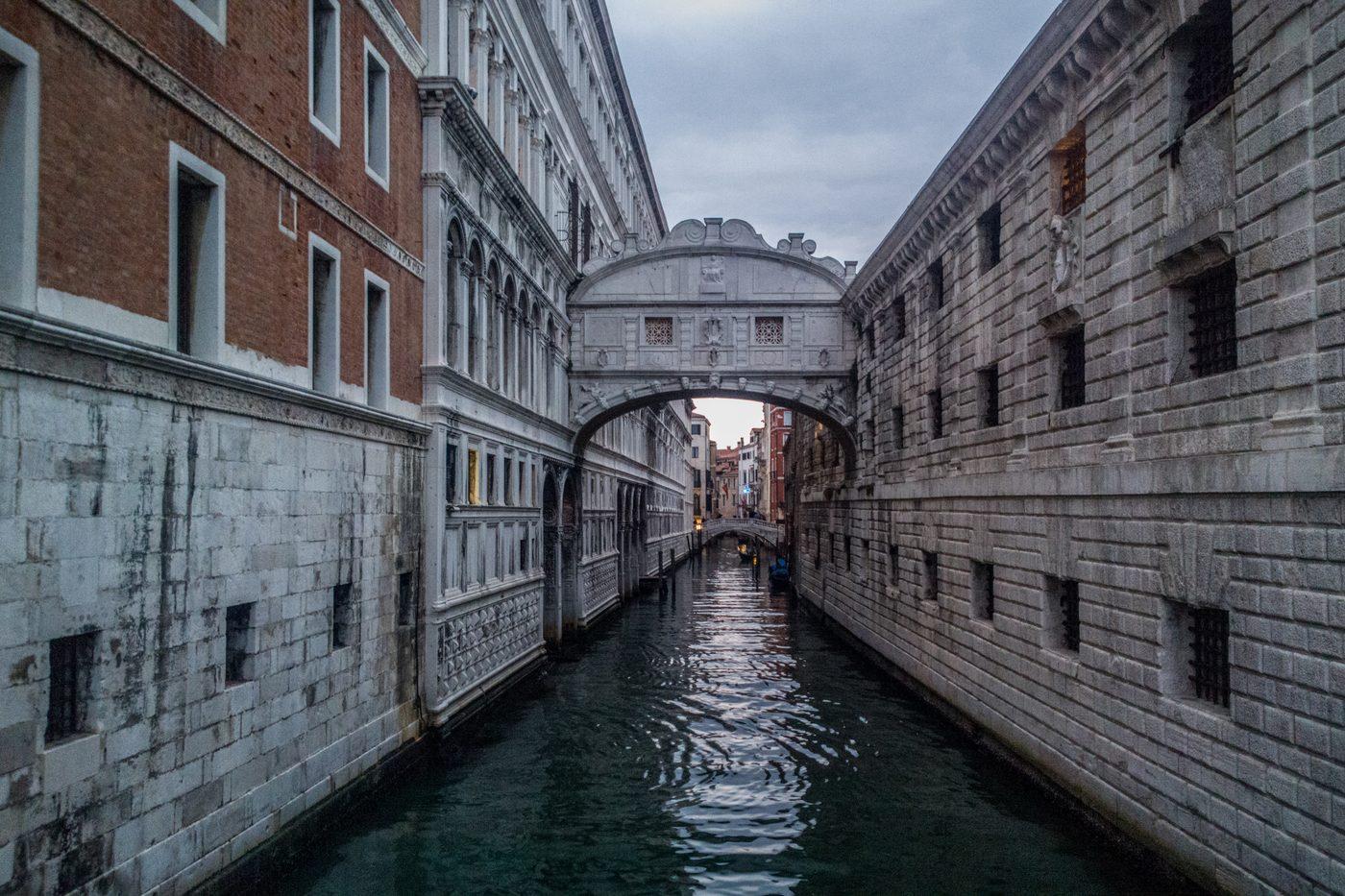
The instinct is to choose a landmark and propose in front of it. The Bridge of Sighs. The Rialto. Santa Maria della Salute across the water.
It is the wrong unit of planning. A landmark is a fixed point, and you are on a moving boat with a person steering it who has their own idea of where the good bits are. What you actually need is a route: a sequence with a known beginning, a known quiet stretch, and a known end, timed so that the quiet stretch arrives when the light does.
A good route has three properties. It passes through at least one canal narrow enough that the sound of the city drops away, because silence is what tells someone that something is about to happen. It gives the photographer a fixed vantage point they can reach on foot before the boat does. And it ends somewhere you can step off and stay, rather than somewhere you are handed back onto a crowded fondamenta with nothing planned.
That last property is the one most often missed. The question is asked, the answer is yes, and then two people who have just changed their lives stand on a bridge wondering what happens now.
What the photographer has to solve first
A proposal is not a photoshoot. It is a production, and the photography is one department inside it. The same logic governs how we plan a proposal in Rome, where the route and the light are settled long before a camera is unpacked.
On a gondola the photographic problem is specific. You are shooting a moving subject from a fixed position, or a moving subject from another moving boat, in low light, with water throwing reflections upward into the lens. There is one pass. The boat does not go around again.
This is why the position is settled before anyone arrives. A photographer who knows Venice will name the bridge, the side of the bridge, and the minute. They will have walked it. They will know which parapet is high enough to shoot over and which one puts a lamp post through the middle of the frame. And they will be in place well before the boat appears, reading as one more person taking pictures of a canal, because in Venice that is the least remarkable thing a person can be doing.
The signal matters too. A hand on the rail, a particular sentence, a hat removed. Something you can do on a rocking boat without looking like you are doing anything. Agreed in advance, rehearsed once, never improvised.
The gondolier is part of the plan
People agonise over whether to tell the gondolier. Tell him.
A gondolier who knows what is coming will slow through the quiet stretch instead of powering through it. He will stop talking at the right moment, which matters more than it sounds, because the standard patter is continuous and cheerful and will otherwise run straight through the question. He will hold the boat steady rather than turning. Some will move to the far end and look elsewhere. Most have done this before and are better at it than any brief you could write.
What he cannot do is improvise in a language he does not speak, at a moment he did not know was coming, on a boat he is also steering. Briefed in Italian, the morning of, by someone he has worked with before, he becomes the most useful person on the water. Told nothing, he is the largest single risk to the timing.
The ring, on a boat, over water
The practical fear is real and worth addressing plainly. A gondola sits low, it moves, and there is water on both sides.
Keep the ring in an inside pocket that closes, not a jacket pocket that gapes when you lean forward, and not a box that needs two hands to open. Many people bring a slim case for the boat and keep the presentation box in a bag for afterwards. Take the ring out while seated and still, not while standing or turning. Nobody has ever regretted being undramatic about this part.
If you are travelling with it, keep it in your carry on rather than checked luggage, and out of your pocket when you pass through security, where it tends to attract exactly the attention you are trying to avoid. Depending on the value and where you are travelling from, a declaration at customs may apply, and carrying proof of where it was bought is sensible.
Acqua alta and the second version of the day
Venice floods. Not dramatically, most of the time, and not unpredictably. High water is forecast, it is announced, and it is survivable if it was planned for.
Wind is the larger risk. Gondolas do not run in heavy wind, and the decision is made by the gondolier on the morning, not by you weeks earlier. Fog closes the lagoon. Rain does not stop a gondola, but it does change what a photograph looks like, and it makes the wooden seats slick.
Every plan we produce carries a second version settled in advance: a different hour, a different route, or a different kind of day entirely, with the vendors already briefed on both. Not a contingency written down and hoped against. A version that has been costed and booked and can be triggered on the morning without a single call reaching the person proposing.
The purpose is not to eliminate weather. It is to make sure that on the day, the weather is our problem rather than yours.
Planning it from another country
Almost nobody plans a Venice proposal from Venice. They plan it from London or New York or Singapore, six weeks out, in the gaps between other things, in a language the gondolier does not speak.
That is the actual difficulty, and it is not romantic. It is vendor emails that go unanswered for days. It is a restaurant that confirms and then does not have the table. It is discovering that the quiet canal you found in a photograph is a fifteen minute walk from anywhere you could plausibly suggest walking to without explaining why.
We work across Venice with native Italian planners on the ground, and everything reaching you happens in English. The approach is the same one we take to proposal planning across Italy, adapted to a city where the streets are water. The scouting, the site visits, the vendor calls and the day itself are carried here. The consultation is complimentary and carries no commitment, and there are never more than three conversations before the day. Within ten days of the first one you have a written plan: the shape of the day, the route, the timing, the florals, the photography, the transport, and the second version.
Six to eight weeks is enough for most of it. For peak season, which runs May to September, or for a specific venue, three to four months is safer. We have delivered proposals on two weeks' notice when the situation required it, and we will tell you honestly what is possible in the time you have.
The hour after
The gondola ride ends. This is the part almost no plan accounts for.
Whatever happens next should already exist. A table held nearby. A terrace. Someone expecting you. The alternative is the two of you standing in a public square at the most significant moment of your relationship, phones out, trying to decide where to eat.
Many couples continue straight into an engagement celebration, whether that is a held table or the next three days. Some want the hour after to be private and quiet. Some want to call everyone they know from a room with a view. Some want the next three days planned as carefully as the twenty minutes on the water. Any of those is a good answer. Having no answer is not.
If the proposal is the thing you remember, the hours around it are the thing you remember it inside of. They are worth the same attention.
Questions we are asked
- Is a gondola proposal a good idea in Venice?
- It works when it is planned as a route with a quiet stretch timed to the light, and it disappoints when it is treated as a backdrop. The boat moves, the pass happens once, and the photographer has to be in position before you arrive. Planned properly it is one of the few proposals that could not happen anywhere else.
- What time of day should a Venice gondola proposal happen?
- Early morning, before the day boats arrive, gives still water and sharp reflections in empty canals. The hour before sunset gives warmer light but heavier traffic on the Grand Canal. Either works if the route runs through interior canals rather than the main waterway.
- What happens if the weather stops the gondola?
- Gondolas do not run in heavy wind, and that decision is made by the gondolier on the morning. Every plan we produce carries a second version settled in advance, with vendors briefed on both, so the alternative can be triggered without any call reaching the person proposing.
- How far in advance should a Venice proposal be planned?
- Six to eight weeks is enough for most arrangements. For peak season, which runs May to September, or for a specific venue, three to four months is safer. We have delivered proposals on two weeks' notice, and we will tell you honestly what is possible in the time available.
- Can the photographer stay hidden on a gondola proposal?
- Yes. The photographer works from a fixed vantage point on a bridge or fondamenta, in position before the boat appears, reading as one more person photographing a canal. A signal agreed with you in advance marks the moment, so nothing has to be improvised on the water.
- What should happen after the proposal?
- Something planned. A table held nearby, a terrace, or a room with a view. Many couples continue into an engagement celebration, from a private dinner to a weekend itinerary or a longer experience, including family if wanted.
Planning something like this
Tell us what you have in mind. The first conversation is complimentary and carries no commitment.
Request a private consultation