What Time of Day to Propose in Rome
23 September 2026/7 min read
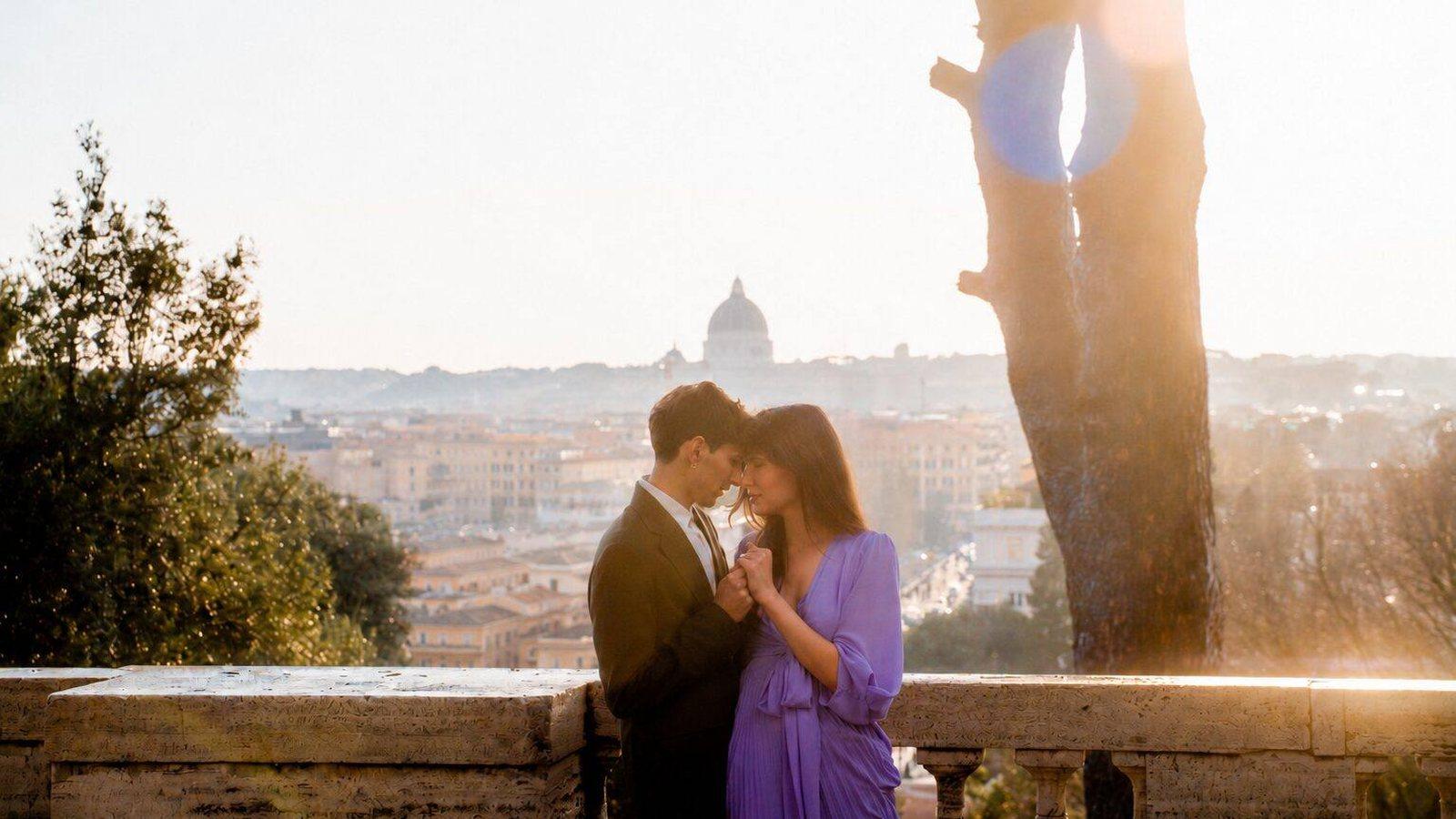
Rome has two good hours, and neither is the one people book
Ask when to propose in Rome and most people picture early evening. Dinner afterwards, the city warm, everyone out.
That hour is the worst of the day for it. The centre is at its fullest between six and eight, every terrace with a view has a service running, the restaurants are turning tables, and the light that looks so good in photographs has usually already gone behind a building.
The two hours that work are the one before the city wakes and the one before the sun goes. They are not interchangeable and they suit different people, and choosing between them is the first real decision in planning a day here.
Golden hour is not a fixed time
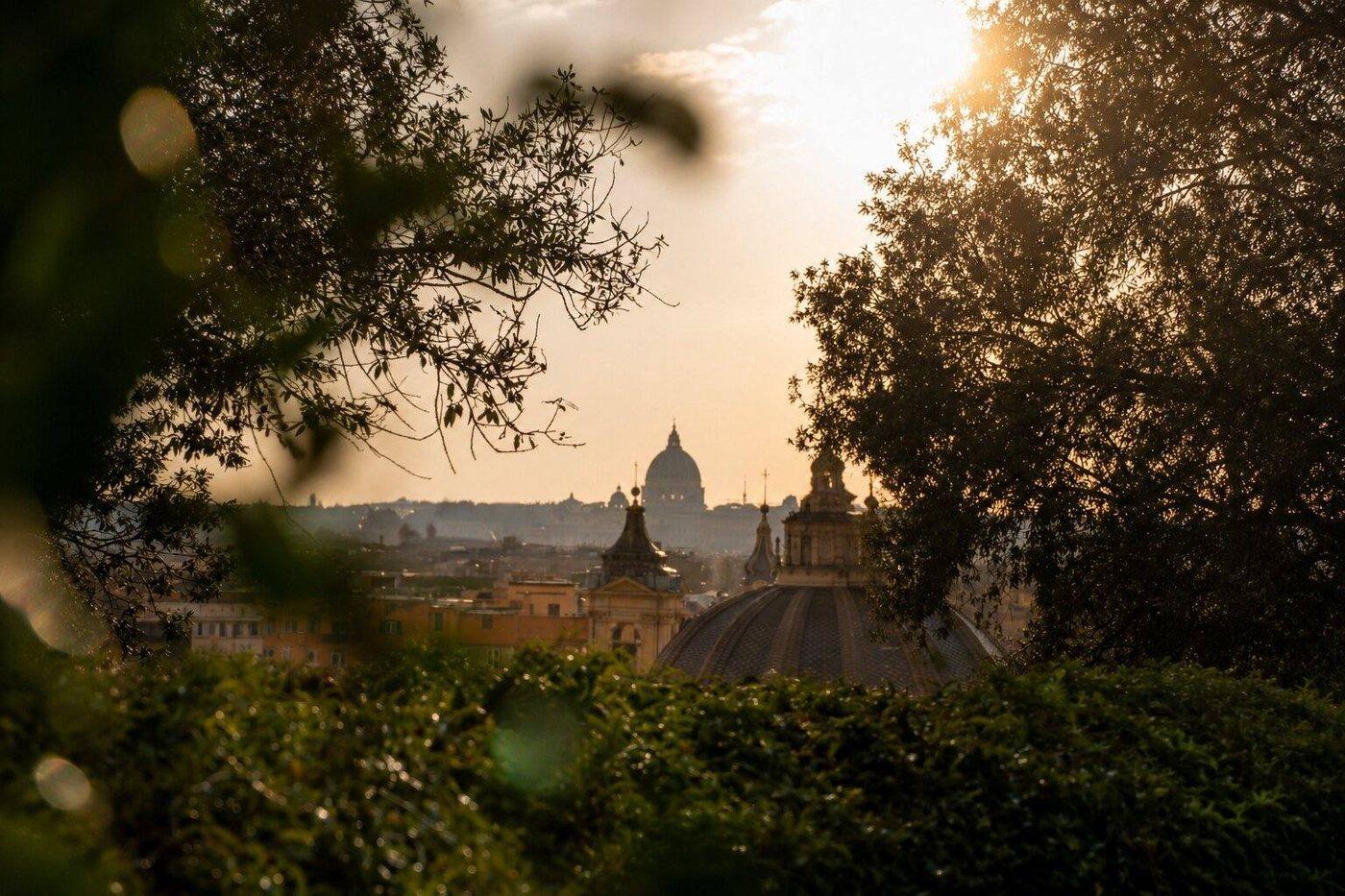
The phrase gets used as though it were a slot in a calendar. In Rome it moves by about three hours across the year, and the hour it moves to is not always usable.
In late spring the light softens around a quarter past seven in the evening and holds for roughly forty minutes. In midwinter the same quality of light arrives before half past four, which means a proposal built around it happens in the afternoon and dinner is a long way off. In August the sun is still high at eight and the heat has barely broken.
None of that is a problem once it is known. It becomes a problem when a day is planned around a dinner reservation and the light is expected to cooperate, which it will not.
We work the other way around. The hour of the light is fixed first, for the specific date, and everything else in the day is arranged behind it.
Before nine, the city belongs to the people who live in it
The early window is the one almost nobody uses, and it is the reason our photographs of the famous places have nobody else in them.
Before nine in the morning the monuments are open air and empty. The light comes in low and sideways, which flatters faces and gives long shadows across stone. Delivery vans are still moving and shutters are still going up, so the city reads as lived-in rather than staged. Bars are open and quiet.
It asks something of you. You have to get two people out of a hotel at six in the morning without explaining why, which is a real problem and a solvable one, usually involving a sunrise walk that was supposedly your idea a week ago.
What you get in return is a version of Rome that visitors almost never see, and photographs that cannot be replicated at any other hour for any amount of money.
The half hour after the sun has gone
The other window opens when most people assume the day is over.
For about thirty minutes after sunset the sky holds a deep even blue while the street lamps and the lit facades come up underneath it. The two light sources balance. Domes and monuments are floodlit but the sky is not yet black, so the background still has depth instead of reading as a hole.
It is the most flattering light in the city and the shortest. Half an hour, and the first ten minutes are the good ones. A plan that reaches the right place five minutes late has missed it, which is why the route and the walking time are worked out in advance rather than estimated.
This window also solves a practical problem: it sits immediately before dinner rather than long before it, so the evening flows from one thing into the next instead of leaving two newly engaged people with three hours to fill.
One more thing the early window gives you that the evening cannot: the option to change your mind. If the light is wrong, or the square is unexpectedly closed, or one of you is simply not ready at half past six, there is a whole day left in which to do it instead. An evening plan has no such margin. When the light goes it is gone until tomorrow, and tomorrow may be the day you fly home.
Why the middle of the day fails, specifically
Not because it is hot, though from June it is.
Overhead sun puts shadows under eyes and noses, flattens the stone into a single grey plane, and blows out the sky behind anyone standing against it. Rome is built from light-coloured travertine and marble, which is beautiful in raking light and glaring at noon.
It is also when every visitor in the city is in the same places you are. A photographer can work around a crowd. They cannot work around the sun being directly above two people's heads.
If the only possible window is the middle of the day, the answer is not a landmark. It is shade with a view, an interior, or a garden with high trees, and the concept changes to suit the light rather than fighting it.
The weather that changes the answer
Two conditions in Rome override everything above, and both are common enough to plan for.
The first is high cloud. A thin even layer turns the whole sky into a softbox, which removes the harsh overhead shadows and makes the middle of the day workable when it otherwise would not be. It also kills golden hour entirely, because there is no direct sun left to go gold. A grey afternoon is a better photographic window than a grey evening, and that inverts the whole schedule.
The second is the heat. From late June through August the city is genuinely hot into the evening, and standing on an unshaded terrace in formal clothes at seven is unpleasant in a way that shows in photographs. In those months the morning window stops being an option and becomes the sensible default.
Neither is knowable weeks ahead, which is why each plan carries an alternative shape as well as an alternative place, agreed before the day so the decision on the morning is ours to make rather than yours to worry about.
What the light does to each setting
The same place is not equally good in both windows, and this is where general advice stops being useful.
A terrace facing west is spectacular in the evening and flat in the morning, because at dawn the sun is behind it and the view is in shade. The same terrace facing east is the reverse. That sounds obvious written down and it is routinely got wrong, because most people scout a location at whatever hour they happen to be free.
Interiors invert again. A courtyard or a room with high windows is often at its best in the middle of the morning, when light is coming in at an angle steep enough to reach the floor but not so steep that it blows out the window frames.
And a street is almost always better after dark than before it, because at night the light comes from doorways and lamps at head height rather than from overhead.
This is the actual content of a scouting visit: not whether a place is beautiful, which is usually obvious from a photograph, but what it does at the specific hour you intend to be standing in it.
Working backwards from the light
The practical method is simple and it is the opposite of how most days get planned.
Fix the hour of the light for the date. Choose the setting that works in that specific light, which is not always the setting that photographs well in general. Position the photographer relative to where the sun will actually be, not where it is when you scout at midday. Then work backwards: what time do you leave, what route, how long does that walk really take with two people who are not in a hurry, where is the car, what happens if the traffic is bad.
Dinner is booked last, around all of it.
We settle this in a written plan within ten days of the first conversation, and there are never more than three conversations before the day itself. That is the same process behind proposal planning across Italy, and in Rome the timing is the part that carries the most weight.
The hours either side
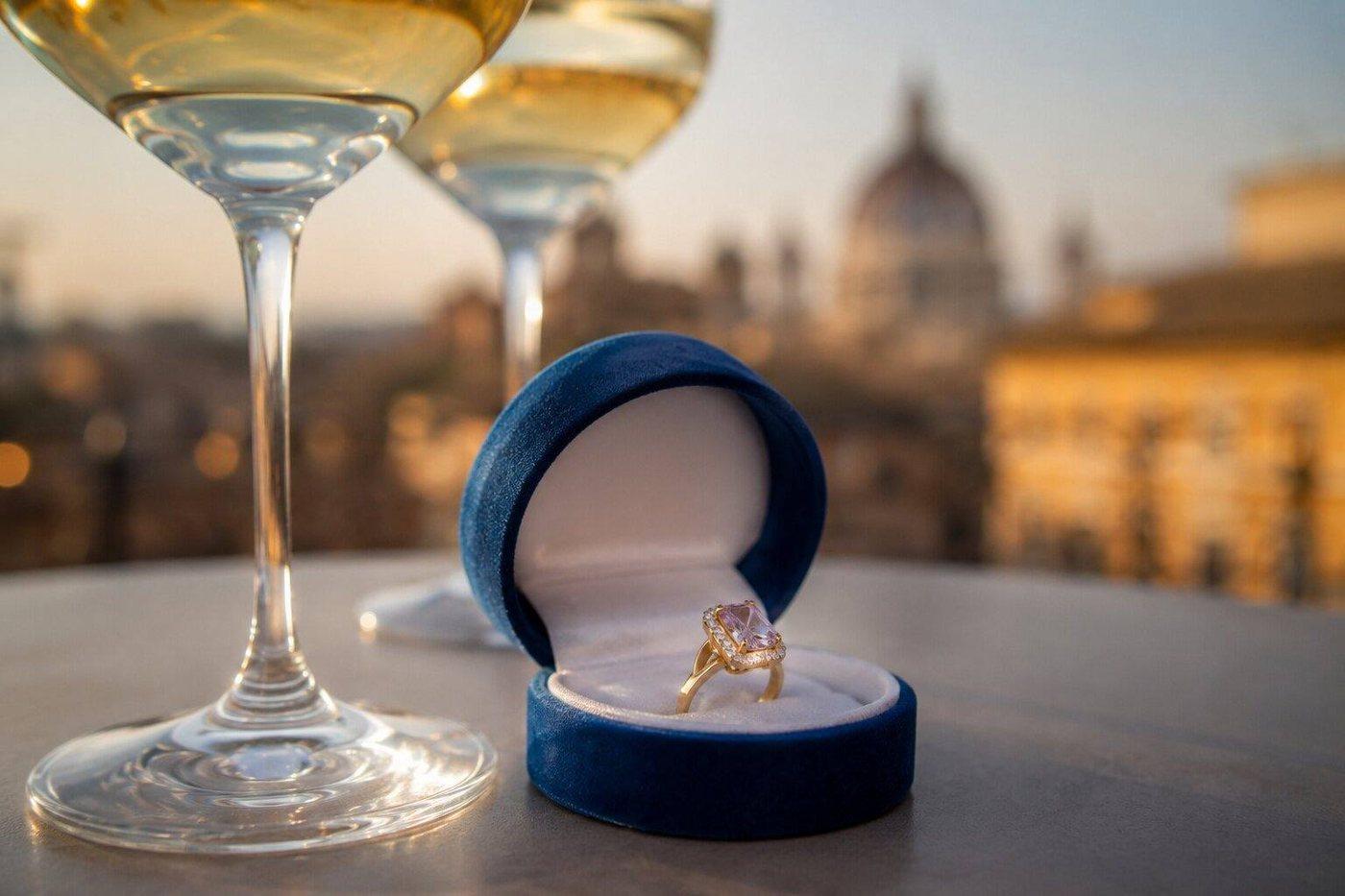
A proposal takes four minutes. The day around it is what people remember.
The early window leaves the whole day open afterwards, which suits couples who want to celebrate slowly, and it puts the two of you in a bar at eight in the morning newly engaged with nobody else awake, which is its own kind of memory.
The evening window runs straight into dinner and then into the night, which suits people who want momentum.
Neither is better. But one of them has to be chosen before anything else is booked, and most people choose it by accident. If you would rather choose it deliberately, that is what the first conversation is for, and it costs nothing.
You can see how the whole day gets built in our approach to proposals in Rome, or how the same logic runs on water in Lake Como.
Questions we are asked
- What time of day is right for a proposal in Rome?
- Either before nine in the morning, when the monuments are empty and the light is low and sideways, or the half hour after sunset, when the lit facades balance against a sky that still has colour. Early evening, which most people assume is right, is the busiest part of the day and the light has usually gone behind a building.
- When is golden hour in Rome?
- It moves by roughly three hours across the year. In late spring the light softens around a quarter past seven in the evening and holds for about forty minutes; in midwinter the same light arrives before half past four. We work it out for the specific date and build the day behind it.
- Is it worth proposing at sunrise in Rome?
- For the photographs, yes, and it is the reason images from the famous places can have nobody else in them. The difficulty is getting two people out of a hotel at six without explaining why, which usually calls for a sunrise walk that was supposedly your idea a week earlier.
- Why not propose in the middle of the day?
- Overhead sun puts shadows under eyes and noses, flattens Rome's pale stone into a single grey plane, and blows out the sky behind anyone standing against it. If midday is the only window, the answer is shade with a view, an interior or a garden with high trees rather than a landmark.
- How long after the proposal should dinner be booked?
- The evening window runs straight into dinner, which is one of its advantages. The morning window leaves the whole day open, so the celebration is usually built more slowly. Either way the table is booked last, around the hour of the light rather than before it.
Planning something like this
Tell us what you have in mind. The first conversation is complimentary and carries no commitment.
Request a private consultation