A Proposal on Lake Molveno: The Quiet Lake Under the Brenta Dolomites
26 September 2026/8 min read
Not a villa lake
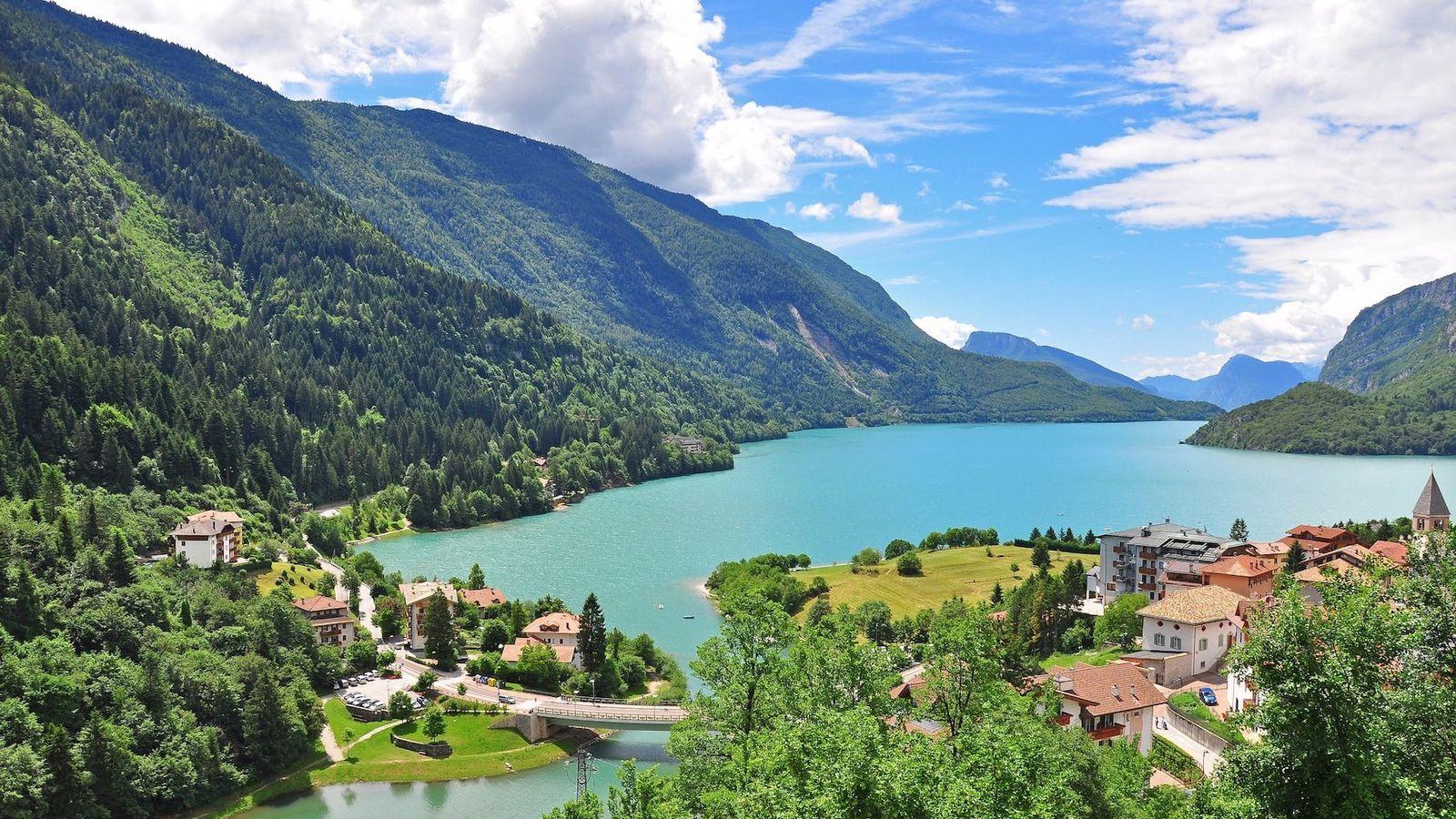
Lake Molveno is small. Around four kilometres of water in a high valley in western Trentino, at roughly 864 metres, with the Brenta Dolomites standing directly above its western shore and forest running down to the water on every side. The village sits at the northern end. There is a lido, a lakeside promenade, a few hotels, and very little else.
This is the first thing to understand about proposing here, and it decides everything that follows. Molveno is not a smaller Lake Como. It has no villa gardens above the water, no palazzos, no terraces that have been photographed for a century. Anyone who arrives expecting that version of an Italian lake will be disappointed by it, and anyone who arrives for what it actually is tends not to want to leave.
What it has is scale and silence. A mountain wall that fills the sky. Water that turns from green to turquoise to a deep cold blue depending on the hour. Legambiente and the Touring Club Italiano have repeatedly named it the most beautiful lake in Italy, and standing above it on a clear morning, the argument is hard to have.
On a villa lake, privacy is a matter of access: the gate, the booking, the garden no one else may enter. At Molveno, privacy is a matter of timing and terrain. The right hour, the right stretch of shore, the right path through the larches. It is found differently, and it is planned differently.
A lake without engines
Motorboats are banned on Lake Molveno. It is one of the protections that comes with sitting inside the Adamello Brenta Nature Park, and for a proposal it is the most important fact about the water.
There is no wake, no engine note, no launch crossing the frame at the moment that matters. The craft on the lake are electric boats, rowing boats, kayaks and pedalos, and in the early morning there are often none at all. Sound carries. You can hear a bell from the village across the whole basin.
A small boat in the middle of that is the most private place in the valley. It moves the two of you away from the promenade and the lido, puts the Brenta behind you with nothing else in frame, and gives you a stretch of time on still water that belongs to no one else. Rowing has its own quality: it is slow, it is deliberate, and it gives the person rowing a reason to stop.
The photographic problem is different from a proposal on Lake Como, where a second boat holds station on busy water. Here a second boat would be the only other thing on the lake, and your partner would notice it. The photographer works from the shore instead, positioned in advance with a long lens, at a point chosen for where the boat will be and where the light will fall. The boat's route is agreed beforehand so that the moment happens in the right place rather than wherever you happen to drift.
The light belongs to the Brenta
The Brenta Dolomites rise on the western side of the lake. That single piece of geography sets the schedule.
In the evening the sun drops behind the Brenta ridge well before it reaches the horizon. The water goes into shade early, and it goes quickly, while the slopes on the eastern side of the valley hold warm light for a while longer. If the moment is on the water or the western shore, it needs to happen earlier than the published sunset suggests. If it is on the eastern side, looking back across the lake at the mountains in silhouette, it can happen later.
The morning is the reverse, and for many couples it is the stronger choice. The sun comes up over the ridge to the east and reaches the Brenta walls first. For a while the pale rock above the lake is lit while the water below is still in shadow and perfectly flat, holding a reflection of the peaks. It is the image most people have in mind when they think of the Dolomites, and it happens before breakfast, when the promenade is empty.
We scout the specific spot at the specific hour before the day, because on a lake this enclosed a stretch of shore a short walk along can be in light or in shade at the moment that counts.
Pradel is the view, and the cover story
The photograph of Lake Molveno that everyone has seen is taken from above. The water laid out in full, the village at one end, the valley running south into the distance.
The simplest way to that view is the cable car from Molveno up to the Pradel plateau, a few minutes' ride above the village. From the top, paths run through meadows and woods along the edge of the plateau, with the lake below and the Brenta across the valley. It is ordinary. It is what every visitor does on a clear day. A suggestion to take it up for a walk and lunch raises nothing at all.
That is exactly why it works. The hardest part of a surprise in a small mountain village is not the moment, it is the hour before it, when your partner can see something assembling. A cable car and a walk is the most natural thing two people in Molveno could decide to do. By the time you reach the point on the path that was chosen weeks earlier, the photographer is already in place and has been for some time.
For couples who walk, the higher paths open further options: meadows with nothing between you and the Brenta, larch woods that go gold in autumn, and mountain huts where a table can be arranged for afterwards. None of these need to be strenuous. They need to be scouted, timed, and matched to the two people involved.
Weather that builds in the afternoon
Alpine summer runs on a daily cycle, and at Molveno it is reliable enough to plan around.
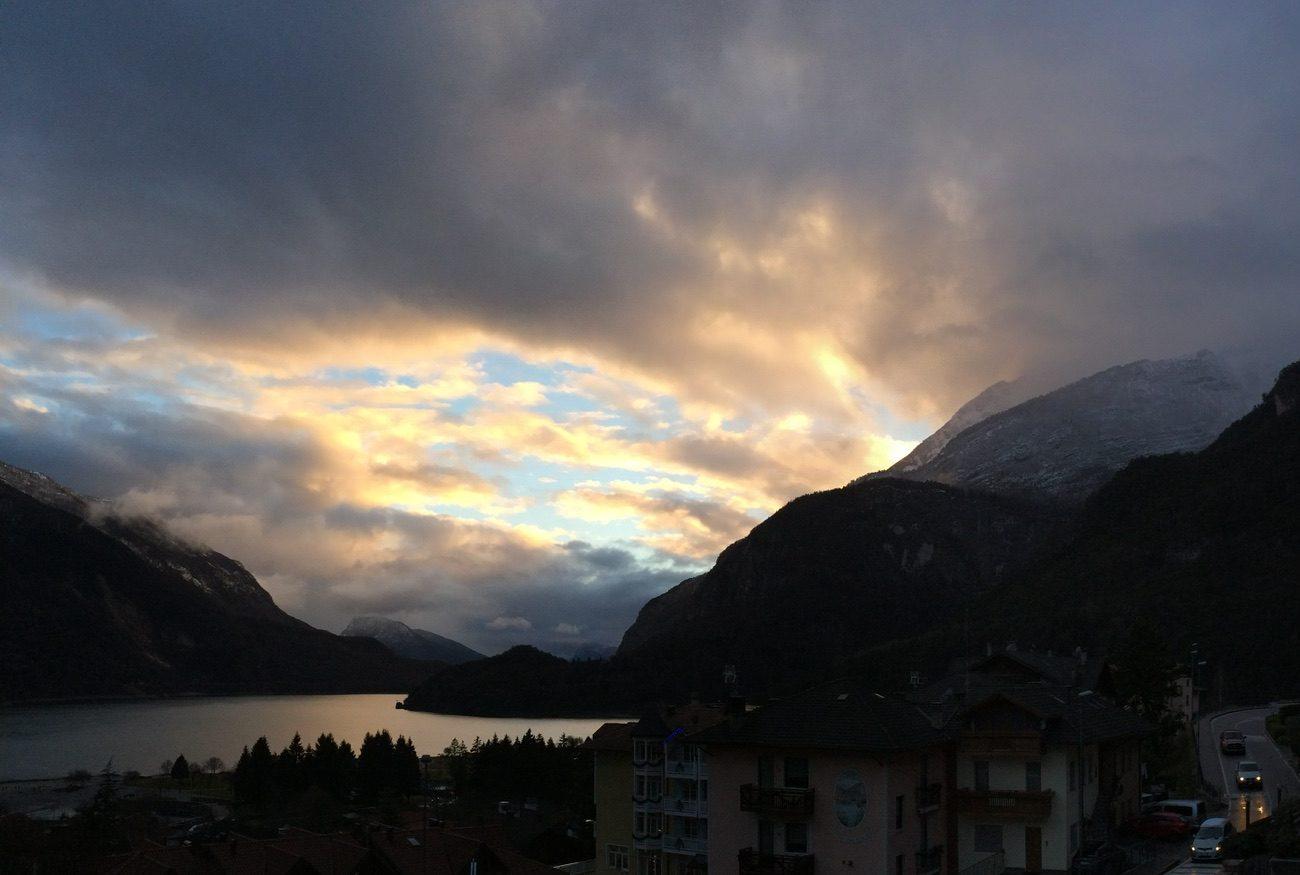
Mornings are typically clear and still. Through the middle of the day cloud builds over the peaks, and on warm days it can turn into a storm by mid afternoon, often short and loud, sometimes gone within the hour. By evening the air usually clears again. The still morning and the early evening are the two usable windows. The afternoon is for lunch.
Altitude changes the rest. At over 850 metres, evenings are cool even in August, and in September they can be cold. The water stays cold all year. Anything planned outdoors needs a layer on hand, a blanket in the boat, and a warm place to go afterwards.
The seasons shift the plan more than they would on a lower lake. June brings long evenings and the lake at its brightest colour. September is quieter, clearer and cooler. October turns the larches gold and can bring the first snow to the peaks, which is either the most dramatic backdrop of the year or a closed path, and which one you get is not always knowable in advance. Every plan we produce carries a second version settled beforehand, covering the weather, the timing and the transport, for exactly this reason.
What the park does not allow
The nature park that keeps the lake silent also sets limits, and they are worth knowing before anyone falls in love with an idea.
Drones are the most common one. Many couples imagine an aerial shot of the boat on turquoise water, and flights inside the park are restricted. We plan the photography around what is permitted, which on this lake is rarely a loss: the view from Pradel does what a drone would, from solid ground, with a person behind the camera who can react.
The same applies to anything built on the shore. A proposal here is not a set with an arch and a hundred candles on the beach. It is a place chosen well, a small number of things done precisely, and a landscape that does most of the work. Styling at Molveno is restraint by necessity, and it suits the lake.
Doing this from another country
Nearly every proposal here is arranged by someone who has never stood on the shore, months ahead, from another time zone.
The work is knowing which details decide the day: when the first cable car runs, where the light falls on the water at seven in the morning in June, which path is still open in late October, how long the drive through the valleys really takes, and where a table can be held for two people coming down from the mountain. Getting there is part of it. Molveno is reached by road, through valleys that are beautiful and slow, and private transport is arranged as part of the plan rather than left to a rental car and a navigation app.
Our approach is the one behind proposal planning across Italy: the idea comes first, and the place is matched to it. Planners are native Italian and on the ground, and every conversation with you is in English. There are never more than three conversations before the day. Within ten days of the first, you receive a written plan covering the shape of the day, the location, the timing, the florals, the photography, the transport, and the second version we run if the morning arrives wrong. The consultation is complimentary and carries no commitment.
Allow at least six to eight weeks. For June to September, or for a specific place, three to four months is the safer margin. We have delivered proposals on two weeks' notice when required, and we will say plainly what the time you have makes possible.
After the boat comes back
On a Molveno morning, the proposal is over by the time most of the village has had coffee. That leaves a whole day, and it should be planned before the moment rather than after it.
The answers here are mountain answers. A long breakfast somewhere warm, looking at the water you were just on. Lunch at a hut above the lake. An afternoon with nowhere to be, and a dinner as the Brenta goes pink and then dark. Or a slow drive out through the valleys to somewhere else entirely.
What does not work is stepping off a boat at the lido, newly engaged, cold, with no plan. Many couples continue into an engagement celebration planned alongside the proposal itself: a private dinner, a weekend, or a few days in the Dolomites with family if wanted. It is usually the better way round. Decide what the day becomes, then decide where the moment happens, because at Molveno the moment comes early and the day that follows is long.
Questions we are asked
- Where is Lake Molveno?
- In western Trentino, in northern Italy, at the foot of the Brenta Dolomites and inside the Adamello Brenta Nature Park. It sits at around 864 metres, with the village of Molveno at its northern end. Most couples arrive by road from Trento, or from an airport such as Verona, and private transport through the valleys is part of the plan rather than an afterthought.
- Is Lake Molveno a good alternative to Lake Como for a proposal?
- For a certain couple, yes. Molveno has none of Como's villas and none of its boat traffic. What it offers instead is scale, silence and a mountain wall directly above the water. Couples who picture a garden terrace are happier on Como. Couples who picture themselves alone with the mountains are usually happier here.
- Can you propose on a boat on Lake Molveno?
- Yes, and the lake suits it unusually well. Motorboats are banned, so the only craft on the water are electric boats, rowing boats, kayaks and pedalos. A small electric boat or a rowing boat in the still morning puts the two of you in the middle of a silent lake with the Brenta behind you. The photographer works from the shore with a long lens, positioned in advance.
- When is the light on Lake Molveno at its most beautiful for a proposal?
- Early morning and early evening. The Brenta Dolomites rise on the western side, so the sun drops behind them well before the published sunset and the water goes into shade while the slopes opposite still hold light. In the morning it is the reverse: the first sun reaches the Brenta walls while the lake is still like glass.
- What time of year suits a proposal in the Dolomites at Molveno?
- June and September are the two strongest months: the lake is at its colour, the paths are open and the crowds are lighter than in August. October brings the larches turning gold, colder mornings and a real chance of early snow on the peaks. Peak season runs May to September, and three to four months' notice is safer for those months.
- How far ahead should a Lake Molveno proposal be planned?
- At least six to eight weeks, and three to four months for peak season or a specific place. We have delivered proposals on two weeks' notice when required, and we will say plainly what the time you have makes possible.
Planning something like this
Tell us what you have in mind. The first conversation is complimentary and carries no commitment.
Request a private consultation